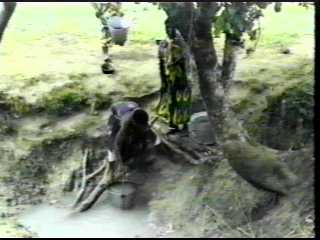
| Throughout much of Malawi people still get their drinking
water from stagnant, scummy water holes, just as they have done for centuries.
This contributes to a high rate of water borne disease and a high child
mortality rate. |
 |
| One of the programs run out of the Embangweni Hospital,
supported by the Marion Medical
Mission, of Marion, Illinois, is a shallow wells program. This helps
the villagers build shallow wells and installs locally made pumps to supply
safe drinking water. |
 |
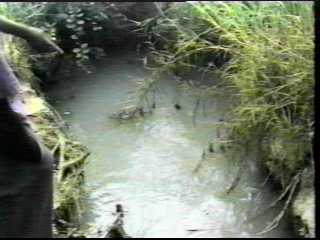
| The shallow wells team helps to locate sites for new
wells. |
 |
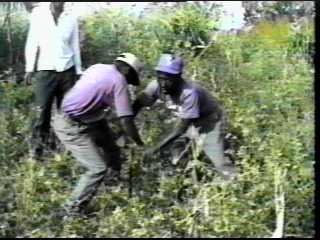
| Here they are drilling test holes to check the soil conditions
and water table. |
 |
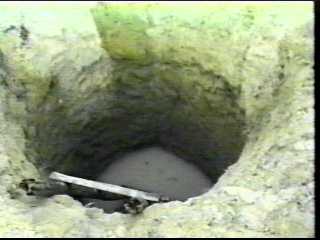
| The villagers themselves dig the wells, about 10 to 20
feet deep and 3 to 5 feet across. They also make the bricks to use in lining
the wells. |
 |
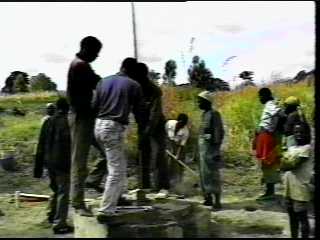
| The shallow wells team manufactures and then installs
the pumps. They also help with ongoing maintenance. |
 |
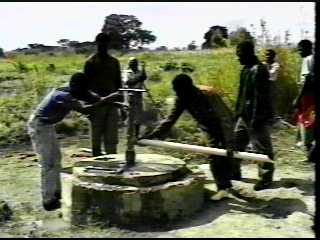
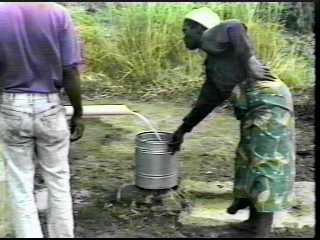
| Villagers form a committee to keep the area clean. They
also pay an annual fee in grain to pay for maintenance. |
 |
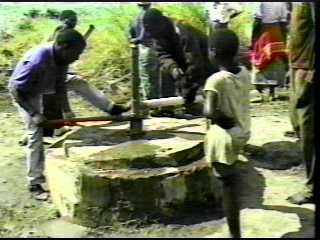
| [Here they are screwing the pump housing into the well
cover.] |
 |
| The cost to build a shallow well is about $300, which
is largely funded by outside donations. |
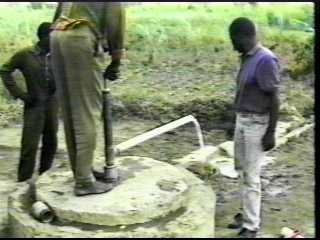 |
| This can provide clean water for 200 to 400 people and
is certainly well worth it. |
 |